Program 7: Sequencing the Past: The Past Perfect Tense
Master the grammatical "time machine" to tell clear, chronological stories about your past.
 Instructor: Avelt
 Starts today.
About this course
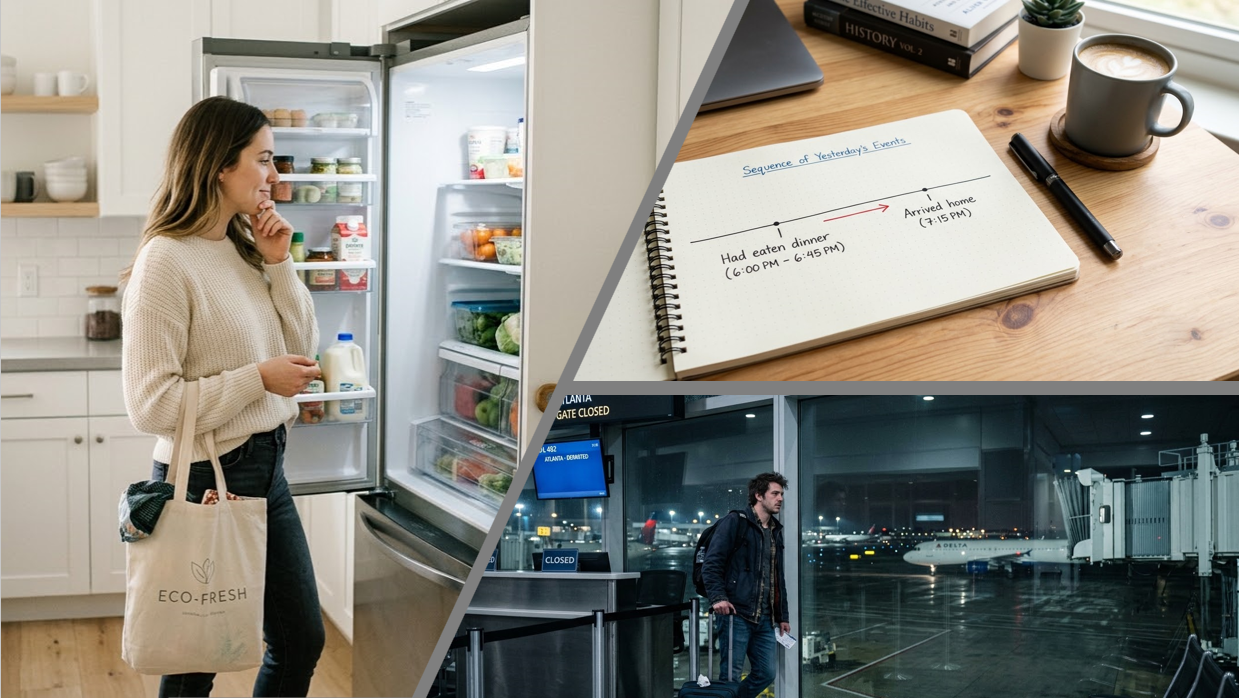
Imagine telling a story about your day. How do you explain that one event happened before another event in the past? Enter the Past Perfect tense (had + past participle)—your grammatical time machine. This program teaches you how to clarify the sequence of past events, showing exactly which action was completed first (e.g., "I had already checked my fridge before I went to the market"). You will learn how to form affirmative, negative ("hadn't"), and Yes/No questions using the auxiliary "had." By pairing this tense with the Simple Past and crucial time expressions like before, after, when, and by the time, you will construct complex, multi-layered narratives using everyday vocabulary, travel nouns, and phrasal verbs.
What you'll learn
Skills you'll gain
Syllabus
Discover what awaits you in this step-by-step program.
Module 1 2 hours
The Past Perfect tense
• Clearly express which of two past actions happened first in a narrative (e.g., "The airplane had already left when we got to the airport").
• Formulate accurate Yes/No questions about earlier past events using the auxiliary "had" (e.g., "Had she finished the meal before he arrived?").
• Provide logical context or reasons for past situations (e.g., "I didn't buy a newspaper because I had already read it online").
• Build chronological stories using sequencing time expressions like by the time, already, before, and after.
• Naturally integrate phrasal verbs (like "get off" or "put on") into complex past narratives.
Enroll today
Start your journey to fluency.
15,000+ already enrolled
-
Intermediate (CEFR B1) Level
Recommended for your stage
-
1 weeks to complete
2 hours a week
-
Flexible schedule
Learn at your own pace
-
Avelt Certificate
Add it to your LinkedIn
You're one step away
Program 7: Sequencing the Past: The Past Perfect Tense
.png)
avelt programs
AI-Powered Tools for English Teachers
2805 Allgeyer Ave, El Monte, California, 91732 USA
Headquarters
Payment
This site is protected by reCAPTCHA and the Google Privacy Policy and Terms of Service apply.