Premium English Bundles
Complete paths and max savings at $14.99/hr x the first 8 hours. Then 24.99/hr
Avelt Essential Bundle
94h 26m TotalReady for first steps in English? Or do you want to improve your grammar? This program is perfect for you. Learn all the grammar actively, no Textbooks, no Workbooks, without memorizing structures: just apply it immediately and naturally, from zero to the most advanced, simply by Observing, Listening, and Speaking.
Avelt Stages Bundle
118h TotalStruggling with listening? Master comprehension progressively, from basics (3–4 words) to advanced fluency (22+ words). Designed to bridge the gap and understand native speakers fast-talking, this program gives you the tools to stop guessing and start hearing every word. The perfect solution!
Avelt Projects Bundle
12h 54m TotalDo you need to discuss important topics in English or participate in debates on current affairs? This program provides specific tools to make your fluency in presenting and debating outstanding. Master critical thinking and advanced communication skills through intensive modules designed for immediate, high-level professional results.
Individual Skill Modules
Targeted learning starting at $14.99/hr
Program 1: Simple Present; Be, prepositions of places, adjectives, the weather, numbers, occupations.
Talking about location of people, and things. People’s states.
Program 2: Present Continuous; Be + ing, time phrases, Use of Get, Possessive adjectives, nouns.
Talking about actions people are doing in this moment or in the future.
Program 3: The use of Have, adjectives, adverbs, who-words, nouns.
Talking about possessions, the family, physical appearance, duties and responsibilities.
Program 3: The use of Want, object pronoun, uncountable nouns, nouns.
To offer something informally, finding out about what other people want to do, finding out about what someone want others to do, and expressing wants and desires.
Program 3: The use of Like, object pronoun, descriptive adjectives; nouns, Like + gerund, Like + to-infinitive.
Talking about likes and dislikes.
Program 3: The use of Go; nouns; adverb of frequency, adverbial phrases, means of transportation.
To talk about places and transportation, outdoor sports activities, frequency of events.
Program 3: The use of Know; nouns, object pronoun.
Talking about knowing people, places. Talking about abilities.
Program 3: The use of Think; adverb of grade; adjectives; the use of ‘Think that’; nouns.
Expressing an Opinion or Belief.
Program 3: The use of Random verbs.
Talking about actions that are repeated regularly and expressing things that are always true.
Program 4: The use of Was-Were; nouns; prepositional phrases; noun phrases; time phrases.
Describing events which have taken place during a specific time in the past.
Program 4: The use of Regular verbs; nouns; prepositional phrases; time phrases; adverbs of degree; possessive adjectives, -ed ending pronunciation.
Talking about actions or events that were completed at a specific time in the past.
Program 4: The use of Irregular verbs; nouns; noun phrases; prepositional phrases; time phrases; adverbs of degree.
Talking about actions or events that were completed at a specific time in the past.
Program 5: Simple future; The use of ‘Will’; nouns; prepositional phrases; noun phrases; time phrases; adverbs of degree.
Expressing actions or events that will occur in the future.
Program 5: Future; Be + Going to; nouns; prepositional phrases; noun phrases; time phrases; adverbs of degree.
Expressing certain plans in the future and expressing our intentions to do something.
Program 6: Modals; The use of Can/May; nouns; prepositional phrases; noun phrases; time phrases; adverbial phrases; adverbs of degree; adjectives.
Talking about possibilities and abilities. Making requests and asking for permission.
Program 6: Modals; The use of Could; nouns; prepositional phrases; noun phrases, adverbial phrases; adverbs of degree; adjectives.
Making request formally, talking about past possibilities.
Program 6: Modals; The use of Should; nouns; prepositional phrases; noun phrases, adverbial phrases; adverbs of degree; adjectives.
Giving suggestions or advice. Talking about mild obligations or duty.
Program 6: Modals; The use of Would; nouns; prepositional phrases; noun phrases, adverbial phrases; adverbs of degree.
expressing desires or preferences, describing conditional situations that are unlikely.
Program 7: Present perfect; Have + PP The use of Ever-Never, nouns; prepositions, adjectives; adverbs; conjunctions; prepositional phrases; noun phrases; adverbial phrases; time phrases.
Talking about experiences in life.
Program 7: Present perfect; Have + PP The use of Yet-Already; nouns; prepositions, adjectives; adverbs; phrasal verbs; prepositional phrases; noun phrases.
talking about things that haven't happened up to now, or things that have happened before now.
Program 7: Present Perf. Cont.; Have + been + ing verb. The use of For-Since; nouns; prepositions; adjectives; adverbial phrases; prepositional phrases; noun phrases.
Describing actions that started in the past, are still ongoing in the present and continue.
Program 7: Past Perfect; Had + past part.; nouns; prepositions; adjectives; adverbs; prepositional phrases; noun phrases.
talking about an action that was completed before another action in the past.
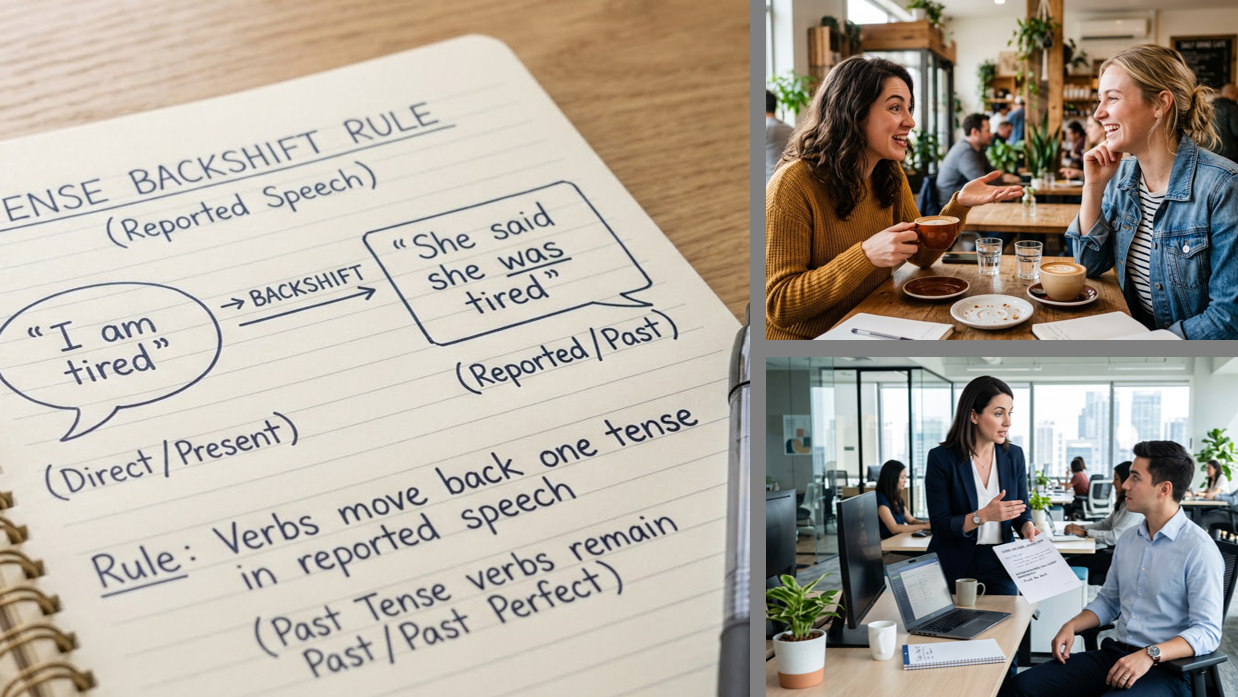
Program 8: Simple Past, Past perfect; Making Reports Nouns, prepositions, adjectives; adverbs; prepositional phrases; time phrases.
reporting statements, questions, commands, and requests.
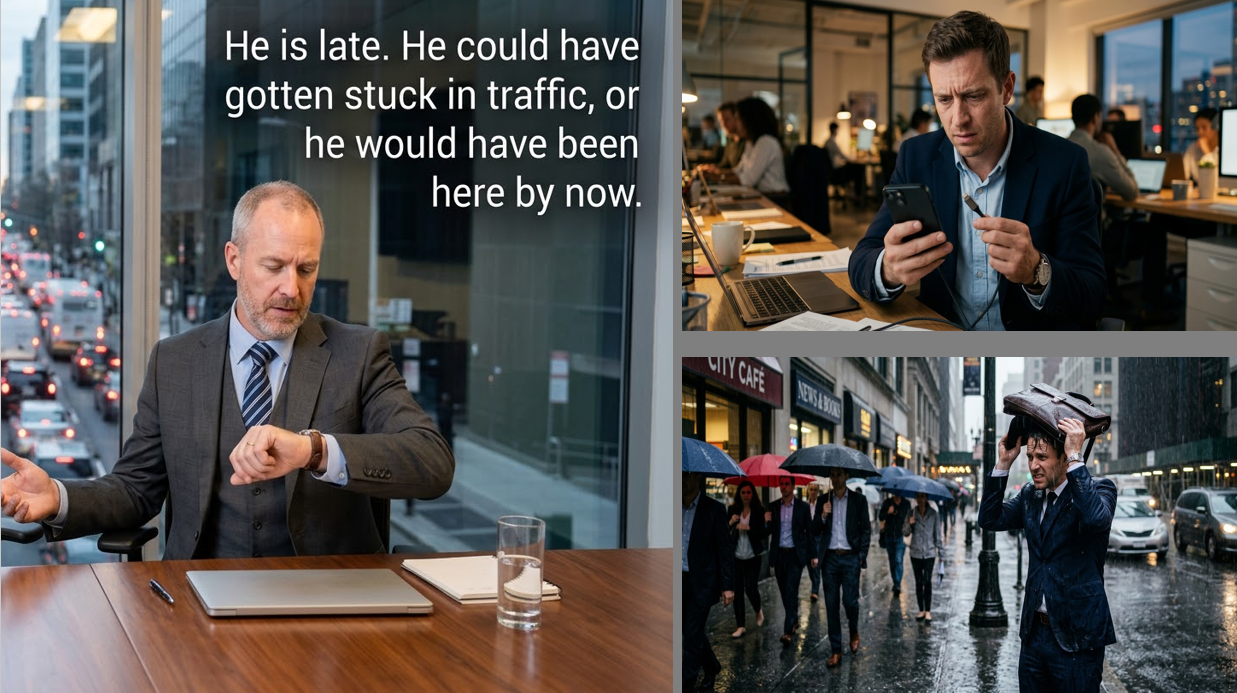
Program 9: Perfect Modals; Would/Could/Should/Must + have + PP; nouns; adjectives; adverbs; prepositions; conjunctions; noun phrases; time phrases; adverbial phrases; prepositional phrases.
talking about past events or situations, expressing various shades of meaning such as possibility, certainty, speculation, regret, missed opportunity, or criticism.
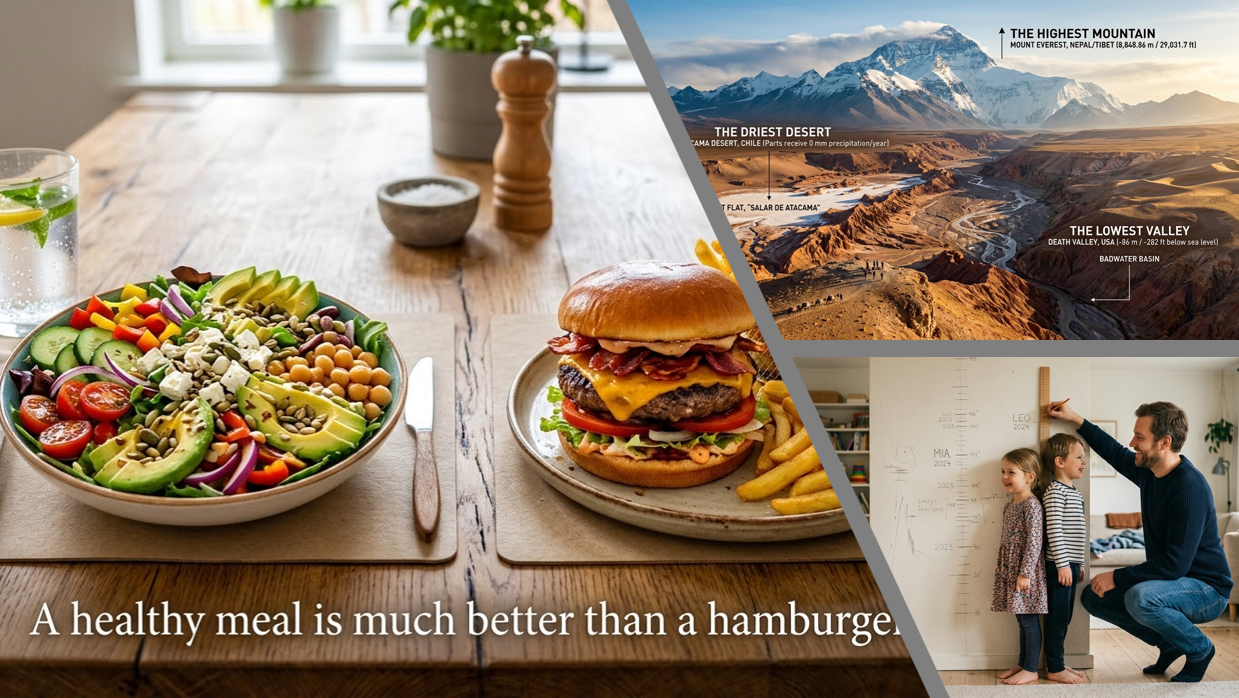
Program 10: Adjectives, adverbs; Making Comparison; nouns; adjectives; adverbs; prepositions; noun phrases; prepositional phrases.
Making comparisons, showing how two or more things are similar or different.
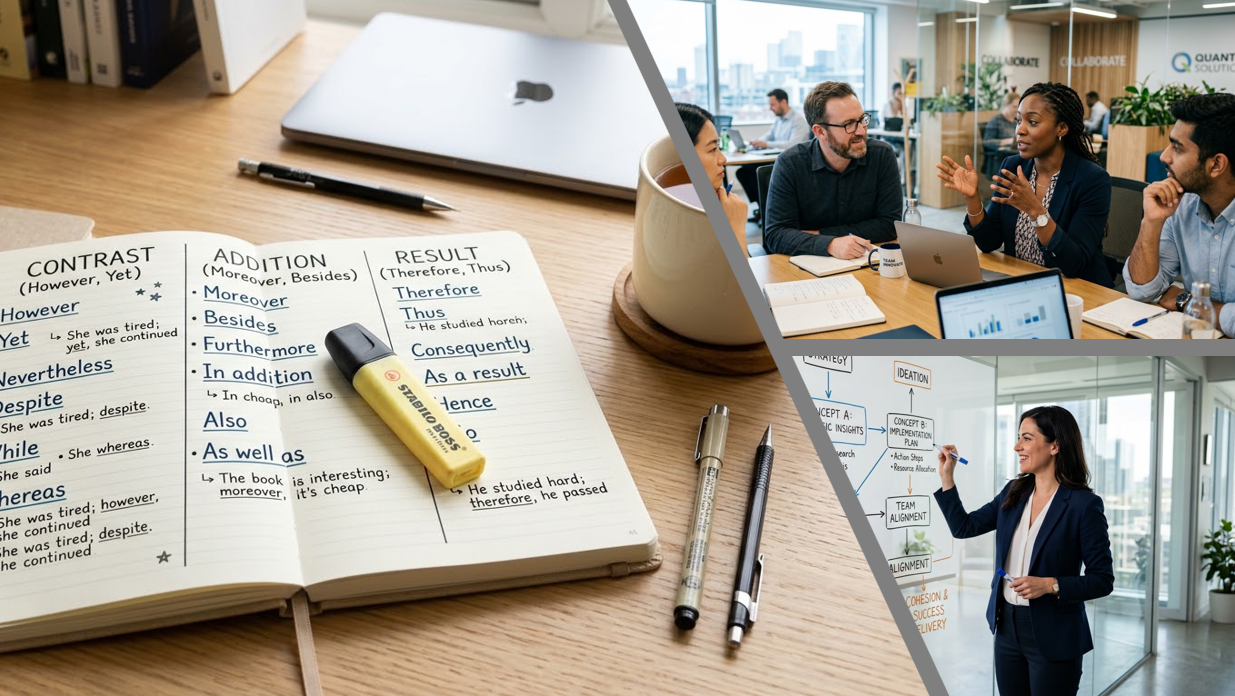
Program 11: 158 Linking words Introduction; Conjunctions, connectors.
Expressing contrast, concessions, adding more information to an idea, introducing or clarifying new ideas, expressing reason, cause or origin of an idea; expressing purpose, consequences, results, disjunctive ideas, conditions, comparisons.
Program 11: Linking Words 1; Contrast/Addition.
Expressing contrast, concessions, adding more information to an idea.
Program 11: Linking Words 2; Clarifying Reason/Cause/Origin/Purpose/Consequences/Results.
Clarifying Reason/Cause/Origin/Purpose/Consequences/Results.
Program 11: Linking Words 3; disjunctive, conditions, reality, comparing, relative clauses.
Expressing disjunctive ideas, drawing attention to a point, clarifying it, or introducing a more precise statement, showing that two things are similar or that something is done in a similar way.
Program 11: Linking Words 4; Time connectors, expressions as connectors.
establishing the chronological order of events.
Stages 1
Start processing 3-4-word sentences. Speed: Extremely slow. 94 simple present sentences, 38 simple past sentences, 36 imperative sentences, 17 present continuous sentences, 13 modal present/future, 8 present perfect, 3 past continuous, 5 other structures.
Stages 2
Start processing 5-6-word sentences. Speed: Very slow. 111 simple present sentences, 52 simple past, 19 simple future, 17 present continuous, 16 imperatives, 16 present perfect, 15 modal: present/future, 2 past continuous, 1 past perfect, 1 infinitive.
Stages 3
Start processing 7-8-word sentences. Speed: Fairly slow. 110 simple present, 68 simple past, 22 modal: present/future, 17 simple future, 13 present continuous, 12 imperative, 5 present perfect, 3 past continuous, 2 present perfect continuous, 1 mast modal, 1 future perfect, 4 other structures.
Stages 4
Start processing 9-10-word sentences. Speed: Slightly slow. 118 simple present, 63 simple past, 31 Modal: present/future, 14 simple future, 10 imperative, 7 present continuous, 3 present perfect, 3 past continuous, 1 present perfect continuous, 1 future continuous, 1 past perfect, 4 conditional: perfect/past modal, 3 other structures.
Stages 5
Start processing 11-12-word sentences. Speed: Moderate/steady. 94 simple present, 68 simple past, 23 modal: present/future, 23 conditional structures, 12 simple future, 9 imperative, 7 present continuous, 5 present perfect, 3 past perfect, 1 present perfect continuous, 2 other structures.
Stages 6
Start processing 13-14-word sentences. Speed: Slightly fast. 110 simple present, 74 simple past, 23 modal: present/future, 18 conditional structures, 12 present perfect, 5 simple future, 4 imperatives, 2 present continuous, 1 past continuous 1 future perfect, 35 phrasal verbs, 19 expressions/idioms.
Stages 7
Start processing 15-16-word sentences. Speed: Fairly fast. 116 simple present, 63 simple past, 31 conditional structures, 23 modal: present/future, 7 present perfect, 5 present continuous, 3 simple future, 2 past continuous, 33 phrasal verbs, 20 expressions/idioms.
Stages 8
Start processing 17-18-word sentences. Speed: Very fast. 117 simple present, 68 simple past, 23 modal: present/future, 19 conditional structures, 10 present perfect, 7 present continuous, 2 simple future, 2 past perfect, 1 past continuous, 1 present perfect continuous, 45 phrasal verbs, 20 expression/idioms.
Stages 9
Start processing 19-21-word sentences. Speed: Extremely fast. 106 simple present, 94 modal: present/future, 11 conditional structures, 8 simple past, present perfect, 3 past perfect, 2 present continuous, 21 other structures, 17 phrasal verbs, 250 expressions/idioms.
Stages 10
Start processing 22-24-word sentences. Speed: Maximum/blazing fast. 116 simple present, 70 simple past, 44 modal: present/future, 9 present perfect, 6 present continuous, 3 simple future, 1 past conditional, 2 conditional structures, 48 phrasal verbs, 250 expressions/idioms.
Module 1 - Topic 1: Be Careful! Big Brother Is Watching!
Level: Intermediate. Focus: Evaluative language and moral stance. Goal: Debate safety vs. freedom. Sections: Warm-Up (The Eye in the Sky), Reading (The Glass Metropolis), Listening (Voices of the Watchers). Vocab: Deterrent, Sentiment Analysis, Panopticon.
Module 1 - Topic 2: Public Figures – Private Life
Level: Intermediate. Focus: Ethical boundaries of sharing info. Goal: Personal boundaries in a digital world. Includes 'The Right to be Forgotten' debate. Vocab: Context collapse, Sharenting, Mirroring.
Module 1 - Topic 3: The Price of Free – The Digital Footprint
Level: Intermediate. Theme: Surveillance Capitalism & Behavioral Economics. Focus: Ethical trade-off between ease and autonomy. Vocab: Monetization, Variable Rewards, Echo Chambers.
Module 2 - Topic 1: Neighbor From Hell!
Level: Intermediate. Linguistic Focus: Modal Verbs of Obligation/Permission. Theme: Conflict resolution and storytelling. Vocab: Tenancy, Mediation, Nuisance. Includes 'The Social Contract' debate.
Module 2 - Topic 2: Spoiled Kids
Level: Intermediate. Focus: Zero, 1st, and 2nd Conditionals. Theme: Social values and consumerism vs. successful upbringing. Vocab: Entitlement, Resilience, Affluence. Includes 'Minimalist Parenting' challenge.
Module 2 - Topic 3: The Experience Economy
Level: Intermediate. Goal: Analyze the shift from materialism to experientialism. Focus: Intangible value vs. physical value. Vocab: High-level finance and psychology terms.
+56 9 9340 7837
+1 (626) 244-7290