Program 3: On the Move: Simple Present & The Verb "Go"
Master daily routines, transportation, and frequency using the foundational simple present tense.
 Instructor: Dave
 Starts today.
About this course
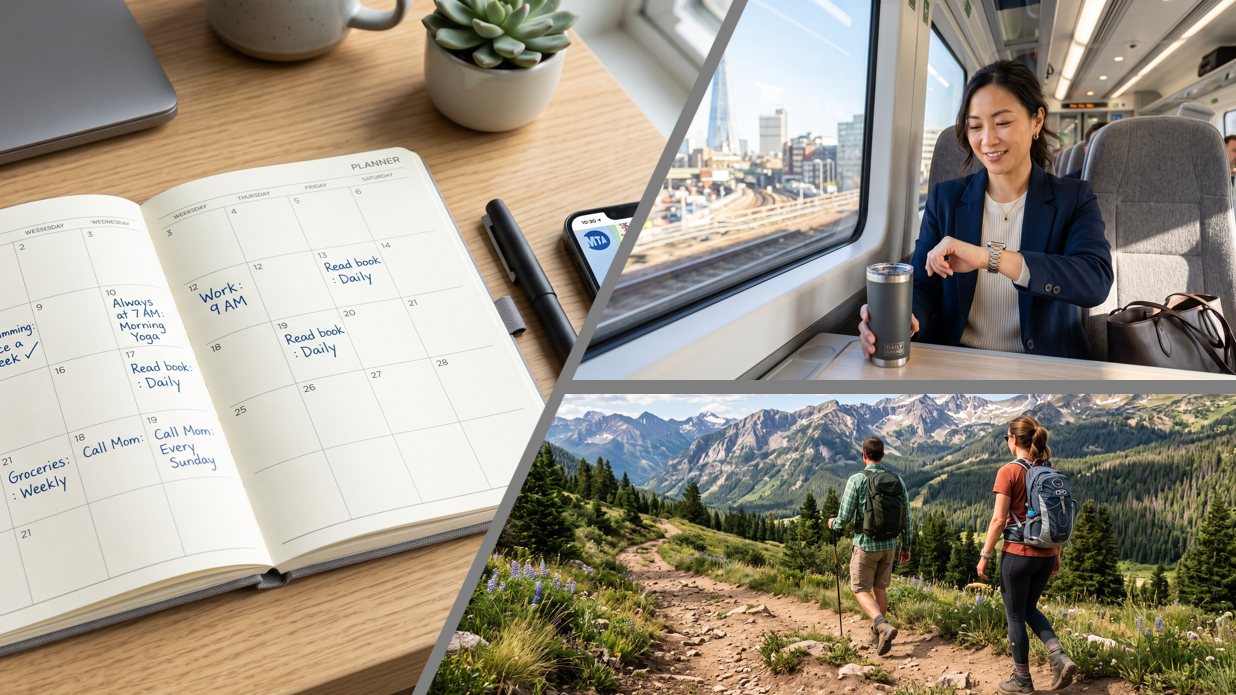
Navigate the world of habits, routines, and permanent situations with the Simple Present tense, focusing specifically on the highly versatile verb "Go." In this program, you will learn to accurately describe where you go, how you get there (transportation), and the outdoor sports you enjoy (like "go skiing" or "go hiking"). You will master the mechanics of forming questions and negative statements using the auxiliary verbs "do" and "does," including the specific rules for third-person singular subjects. To add precision to your conversations, you will build a comprehensive vocabulary of adverbs and adverbial phrases of frequency. Finally, you will continue refining your North American accent by applying the "D/T flap" to common connected-speech phrases.
What you'll learn
Skills you'll gain
Syllabus
Discover what awaits you in this step-by-step program.
Module 1 4 hours
The Simple Present Tense with the verb
• Describe permanent situations, general facts, and regular habits.
• Formulate correct affirmative, negative, and interrogative sentences (Yes/No and Wh- questions) using "do" and "does."
• Discuss commutes and travel methods accurately using transportation vocabulary (e.g., "go to work by train").
• Talk about hobbies and outdoor activities using the "go + [verb]-ing" structure.
• Express exactly how often events happen using a wide scale of frequency adverbs and time phrases.
• Pronounce the "D/T flap" in conversational phrases (like "What do you do?") for more natural, fluent North American speech.
Enroll today
Start your journey to fluency.
15,000+ already enrolled
-
Beginner (CEFR A1) Level
Recommended for your stage
-
2 weeks to complete
2 hours a week
-
Flexible schedule
Learn at your own pace
-
Avelt Certificate
Add it to your LinkedIn
You're one step away
Program 3: On the Move: Simple Present & The Verb "Go"
.png)
avelt programs
AI-Powered Tools for English Teachers
2805 Allgeyer Ave, El Monte, California, 91732 USA
Headquarters
Payment
This site is protected by reCAPTCHA and the Google Privacy Policy and Terms of Service apply.